

Best HubSpot Alternatives: 15 Self-Hosted CRM Options in 2026
Take Control of Your Data with These Powerful Self-Hosted CRM Solutions
The best HubSpot alternative for most businesses is Grow CRM—a self-hosted, all-in-one solution offering unlimited users, complete data ownership, and all essential features for just $54 (one-time payment), compared to HubSpot’s $1,600+/month Professional plan.
HubSpot’s pricing can quickly escalate from $45/month for 1,000 contacts to over $4,000/month when you hit 100,000 contacts. The Professional plan starts at $1,600/month base price, and costs multiply as your contact database and team grow. For businesses seeking data ownership, predictable costs, and freedom from subscription fatigue, self-hosted CRM alternatives offer a compelling solution.
This comprehensive guide examines 15 self-hosted CRM options that deliver HubSpot-level functionality without recurring fees, vendor lock-in, or data privacy concerns. You’ll discover solutions ranging from free open-source platforms to affordable one-time payment systems, each offering complete control over your customer data and business processes.
Grow CRM
The Complete Self-Hosted Business Management Platform
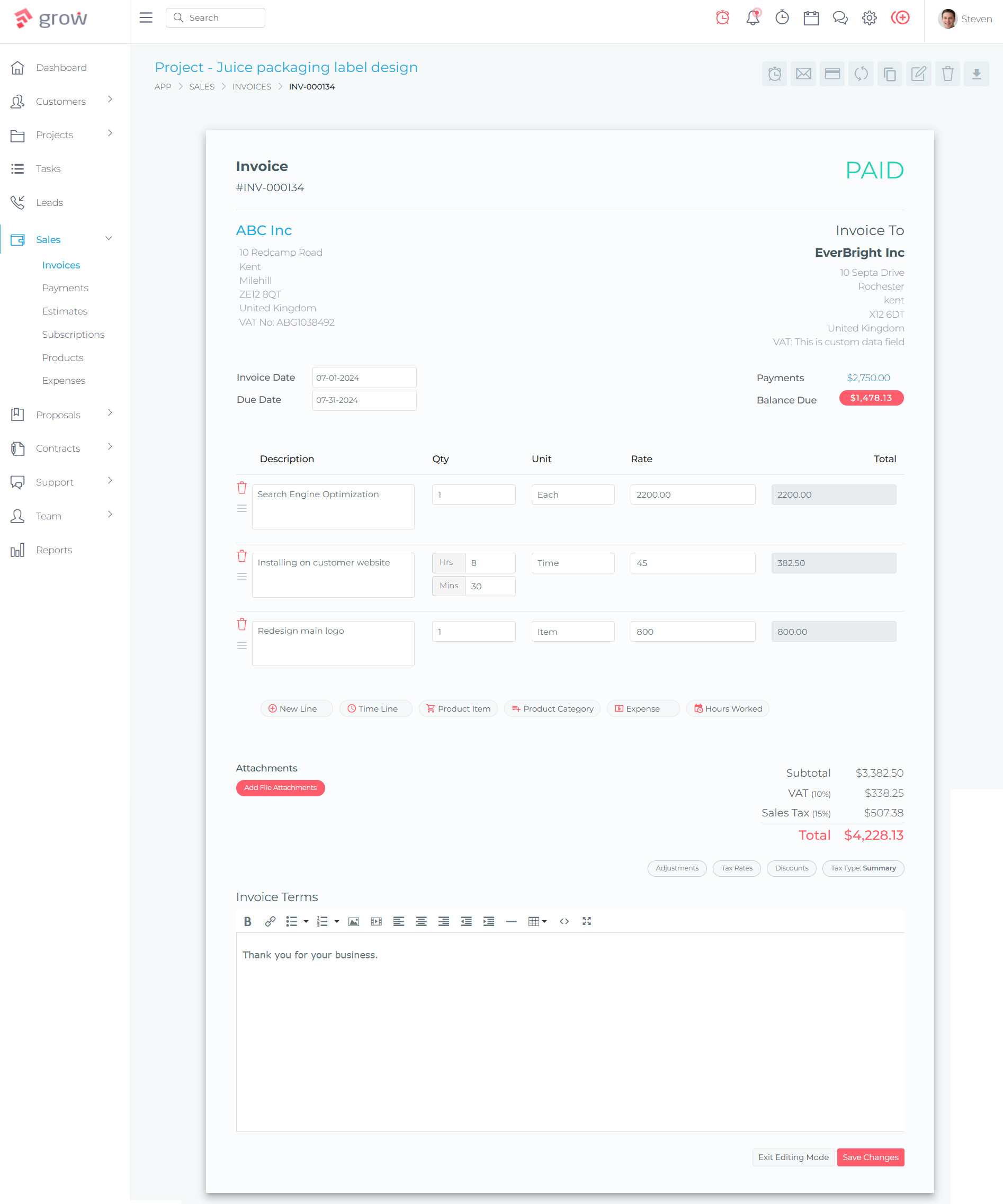
Grow CRM stands as the premier self-hosted alternative to HubSpot, delivering an all-in-one business management platform that eliminates subscription costs while providing complete data ownership. Built on the modern Laravel framework, Grow CRM combines contact management, project tracking, invoicing, helpdesk, and time tracking into a single unified system—all for a one-time payment of just $54.
Unlike HubSpot’s escalating contact-based pricing model, Grow CRM offers unlimited users, unlimited contacts, and unlimited projects without any recurring fees. The platform includes free lifetime updates, free installation service, and support for 30 languages, making it accessible to teams worldwide. With integrated payment gateways including Stripe, PayPal, Mollie, Razorpay, Tap, and Flutterwave, businesses can accept payments directly through their CRM.
What truly sets Grow CRM apart is its comprehensive feature set that rivals enterprise platforms. The system includes advanced project management with milestones and Kanban boards, professional invoicing with recurring billing, contract management, proposal generation, estimate creation, built-in helpdesk with ticket tracking, detailed reporting and analytics, client portal access, lead management with pipeline visualization, and workflow automation—all self-hosted on your infrastructure for complete control.
Key Features:
- Complete CRM with unlimited contacts, leads, and pipeline management
- Full project management system with tasks, milestones, and Kanban boards
- Professional invoicing with recurring billing and multiple payment gateways
- Built-in helpdesk and ticketing system for customer support
- Time tracking and timesheet management for accurate billing
- Contract management, proposals, and estimates generation
- Comprehensive reporting and analytics dashboard
- Client portal for customer self-service access
- 30+ language support for international teams
- REST API for custom integrations and automation
- Custom fields and workflow automation
- Free installation service and lifetime updates included
✅ Pros
- One-time $54 payment with no recurring fees
- Unlimited users, contacts, and projects
- Complete data ownership and privacy control
- All-in-one solution eliminates multiple subscriptions
- Modern Laravel-based architecture
- Free lifetime updates and installation service
❌ Cons
- Requires self-hosting infrastructure (server/hosting)
- Initial technical setup needed (though installation service is free)
- Advanced customization may require PHP/Laravel knowledge
💰 Pricing
One-Time Payment: $54 (standard self-hosted version)
Includes: Unlimited users, unlimited contacts, free lifetime updates, free installation service, full source code, 30+ languages, all features unlocked
Additional Option: SaaS version available at $169 one-time payment for launching your own CRM service business
Invoice Ninja
Open-Source Invoicing with CRM Capabilities
Invoice Ninja is a powerful open-source platform that combines invoicing, billing, and client management into one cohesive system. While primarily focused on invoicing, it includes essential CRM features for freelancers and service-based businesses looking to manage client relationships while handling billing.
The platform excels at time tracking that converts logged hours directly into billable invoices, making it ideal for consultants and agencies. Invoice Ninja supports dozens of payment gateways and currencies, allowing businesses to accept payments globally while maintaining professional branding through customizable invoice templates.
Key Features:
- Customizable invoicing with multiple professional templates
- Integrated time tracking with automatic invoice conversion
- Client management with contact organization
- Expense tracking and financial management
- Project and task creation with billable hour tracking
- Automatic import of bank and PayPal transactions
- Multi-currency and multi-language support
- Client portal for invoice access and payments
✅ Pros
- Free plan available with unlimited invoices
- Excellent time-to-invoice workflow
- Strong payment gateway integrations
- Self-hosted option for complete control
❌ Cons
- More invoicing-focused than full CRM
- Free plan limited to 5 clients
- Advanced features require paid plans
- Limited project management capabilities
💰 Pricing
Free Plan: 5 clients included with unlimited invoices
Paid Plans: $8/month (individuals) to $12-36/month (enterprises) for white-label branding and unlimited clients
Self-Hosted: Free with full source code access
SuiteCRM
Enterprise-Grade Open Source CRM
SuiteCRM positions itself as an open-source alternative that rivals Salesforce in power and functionality. This enterprise-grade CRM covers the complete customer lifecycle—from leads and opportunities to accounts, cases, quotes, and invoicing—without locking features behind premium tiers.
Built for businesses that need sophisticated customization and workflow automation, SuiteCRM offers module builders, custom fields, and workflow engines that allow you to tailor the system to your exact business processes. The platform includes comprehensive reporting and dashboards for data-driven decision making.
Key Features:
- Full customer lifecycle management (leads to customers)
- Advanced workflow automation and process management
- Module builder and studio for customization
- Comprehensive reporting and analytics dashboards
- Campaign management and email marketing
- Quote and opportunity management
- Case management for customer support
- Mobile app for iOS and Android
✅ Pros
- Completely free for self-hosted deployment
- Enterprise-level features and scalability
- Extensive customization capabilities
- Large community and ecosystem
❌ Cons
- Steeper learning curve than simpler CRMs
- Interface can feel dated compared to modern tools
- Requires technical expertise for customization
- Implementation costs can be significant
💰 Pricing
Self-Hosted: Free (open source)
Hosted Solution: Starting at £100/month (~$109) for 1-10 users
Support Plans: £3,000-£7,500/year depending on hours needed
Implementation: Typically $5,000-$20,000 for professional setup
EspoCRM
Lightweight and User-Friendly Open Source CRM
EspoCRM strikes an excellent balance between functionality and simplicity, offering a modern, intuitive interface that makes it accessible to teams without extensive CRM experience. The platform emphasizes workflow automation to reduce manual tasks while maintaining the flexibility needed for customization.
Available as both self-hosted and cloud-hosted solutions, EspoCRM empowers businesses to choose their deployment model. The open-source nature allows for unlimited customization without licensing restrictions, making it attractive for businesses with specific requirements.
Key Features:
- Contact and account management with centralized data
- Customizable sales pipelines and opportunity tracking
- Lead management with qualification workflows
- Task and activity management for organizing workflows
- Workflow automation to minimize manual work
- Email integration with tracking
- Calendar and meeting scheduling
- Custom entities and fields
✅ Pros
- Clean, modern user interface
- Free plan available to test features
- Strong customization capabilities
- Both self-hosted and cloud options
❌ Cons
- Paid plans have per-user pricing
- Minimum user requirements on paid tiers
- Limited integrations compared to major platforms
- Advanced features require higher tier plans
💰 Pricing
Free Plan: Limited features, great for testing
Basic: $15/user/month (minimum 3 users)
Enterprise: $25/user/month (minimum 5 users)
Ultimate: $69/user/month (minimum 10 users)
Self-Hosted: Free with open source license
Vtiger CRM
All-in-One CRM with Marketing and Support
Vtiger CRM delivers an all-in-one platform that combines sales, marketing, and customer support into a unified system. This comprehensive approach eliminates the need for multiple tools, providing enterprise-grade features at a fraction of the cost of comparable alternatives.
The platform includes robust capabilities like lead scoring, sales insights, work order management, and project management—features typically found only in high-end enterprise CRMs. Vtiger’s flexible pricing model accommodates both standard users and single-app users, optimizing costs for teams with varied needs.
Key Features:
- Multi-pipeline sales management
- Marketing automation with email and SMS campaigns
- Lead scoring and sales insights
- Customer support ticketing and case routing
- Project management with task tracking
- Invoicing and inventory management
- Appointment scheduling and approvals
- Document tracking and team mailbox
- Automated workflows and surveys
✅ Pros
- Comprehensive all-in-one platform
- Free plan available for small teams
- Enterprise features at affordable pricing
- Strong marketing automation capabilities
❌ Cons
- Per-user subscription pricing
- Can be complex due to feature breadth
- Monthly billing significantly more expensive
- Learning curve for full feature utilization
💰 Pricing
Free Plan: Basic features for up to 15 users
One Growth: $12/user/month (annual) or $15/month (monthly) – max 15 users
One Professional: $30/user/month (annual) or $42/month (monthly)
One Enterprise: $42/user/month (annual) or $58/month (monthly)
Note: Single-app users available at reduced rates on Professional and Enterprise
Odoo
Comprehensive ERP with Powerful CRM Module
Odoo represents a complete business management suite that includes a powerful CRM as part of its integrated ERP ecosystem. The platform’s modular architecture allows businesses to start with CRM and gradually add other modules like inventory, accounting, HR, and manufacturing as needs evolve.
The CRM module leverages AI for lead scoring and automatic routing, helping teams prioritize high-intent prospects efficiently. Odoo’s 360° customer view consolidates all interactions—emails, meetings, website visits, and notes—into a single comprehensive profile, providing complete context for every customer relationship.
Key Features:
- AI-powered lead scoring and routing
- Multi-source lead capture (web forms, email, imports)
- 360° customer view with activity history
- Sales script automation and activity scheduling
- Email tracking and integration
- Pipeline visualization and management
- Quotation and sales order generation
- Seamless integration with other Odoo modules
- Mobile app for field access
✅ Pros
- Free forever plan for single app (including CRM)
- Comprehensive ERP ecosystem for growth
- AI-powered automation and insights
- Open source foundation with customization
❌ Cons
- Can be overkill if you only need CRM
- Complexity increases with multiple modules
- Full suite pricing becomes expensive
- Requires technical knowledge for self-hosting
💰 Pricing
One App Free: €0 – Complete access to any single Odoo app (including CRM) with unlimited users
Standard Plan: ~$31.10/user/month (annually) or ~$38.90/month (monthly) – All apps included
Custom Plan: ~$46.80/user/month – Everything in Standard plus additional features
Self-Hosted: Free open source version available
YetiForce
Feature-Rich Polish CRM with 100+ Modules
YetiForce stands out with over 100 user and admin modules that can be freely configured to match any company’s unique requirements. This Polish-developed CRM system emphasizes high customization, allowing businesses to tailor every aspect of the system to their specific workflows and processes.
The platform includes a built-in email module for sending and receiving mail directly within the CRM, with the ability to link emails to various entities including contacts, leads, accounts, and projects. YetiForce’s extensive widget library provides customizable dashboards with real-time data visualization.
Key Features:
- Over 100 customizable modules
- Built-in email client with entity linking
- Advanced workflow automation
- Comprehensive contact and company management
- Time control and project tracking
- Extensive widget library for dashboards
- Multi-user and role-based permissions
- Calendar and event management
- Mobile-responsive interface
✅ Pros
- Completely free and open source
- Exceptional level of customization
- Massive feature set out of the box
- Cloud or on-premise deployment
❌ Cons
- Overwhelming feature set for simple needs
- Interface complexity requires training
- Documentation primarily in Polish (translations available)
- Smaller English-speaking community
💰 Pricing
Self-Hosted: Free and open source with no license fees
Support: Paid support and services available through marketplace
Cloud Hosting: Optional paid hosting services available
Dolibarr ERP CRM
Lightweight ERP for Small Businesses
Dolibarr ERP CRM positions itself as a lightweight, user-friendly solution perfect for freelancers, small businesses, and nonprofits. Used by millions worldwide, this French-developed platform combines essential ERP and CRM functionality without the complexity of enterprise systems.
The modular architecture allows users to activate only the features they need, keeping the interface clean and performance optimized. Dolibarr includes extensive third-party integrations via REST API, connecting with popular services like PayPal, Stripe, Google Calendar, WooCommerce, and Magento.
Key Features:
- Sales and customer relationship management
- Product and stock management
- Financial management and billing
- Human resource management
- Project and task management
- Marketing campaign management
- E-commerce integration
- REST API for third-party connections
- Donation management for nonprofits
- Multi-company support
✅ Pros
- Free under GNU GPL license
- Lightweight and easy to use
- Modular approach for simplicity
- Strong e-commerce integrations
❌ Cons
- Less sophisticated than enterprise CRMs
- Interface design is functional but dated
- Limited advanced automation features
- Smaller ecosystem than major platforms
💰 Pricing
Self-Hosted: Free under GNU General Public License 3.0
Cloud Basic: €14/user/month
Cloud Premium: €30/month flat fee + €15/user/month
Free Trial: 15-day trial available for cloud plans
Akaunting
Free Accounting Software with CRM Module
Akaunting is an open-source accounting platform that includes a powerful CRM module for managing customer relationships alongside financial operations. This integration makes it particularly valuable for service businesses that need to track both customer interactions and financial transactions in one system.
The CRM module allows unlimited contacts with detailed information including company details, currency preferences, acquisition stages, and contact ownership. Users can open deals and track every step of the customer journey from proposal to winning stage, with customizable pipeline stages and comprehensive activity logging.
Key Features:
- Unlimited contacts with detailed profiles
- Deal tracking with customizable pipeline stages
- Activity logging (calls, meetings, notes, emails)
- Acquisition source tracking
- Professional invoicing with templates
- Expense tracking and budget management
- Financial reports (balance sheet, P&L, general ledger)
- Multi-currency support
- Integrations with WooCommerce, PayPal, Stripe, Shopify
✅ Pros
- Free and open source core platform
- Excellent accounting and CRM integration
- Affordable add-on pricing
- Strong e-commerce connections
❌ Cons
- CRM features require paid module
- More accounting-focused than CRM-first
- Limited advanced CRM automation
- Smaller feature set than dedicated CRMs
💰 Pricing
Core Platform: Free and open source
CRM Module: Paid add-on (much cheaper than standalone CRM platforms)
Other Modules: Individual pricing for double-entry accounting, inventory, payroll, etc.
Self-Hosted: Free with unlimited installations
ERPNext
Complete Open Source ERP with Integrated CRM
ERPNext delivers a comprehensive business management suite that integrates CRM with accounting, inventory, HR, production, and more. Built on the Frappe framework, this platform provides enterprise-level functionality while remaining free and open source for self-hosted deployments.
The CRM system integrates seamlessly with other ERPNext modules, enabling businesses to track the entire journey from lead to customer to invoice to payment—all within a single unified platform. This integration eliminates data silos and provides complete visibility across all business operations.
Key Features:
- Complete lead and opportunity tracking
- Sales pipeline management with forecasting
- Customer support and communication tools
- Targeted email campaigns to leads and prospects
- Quote generation and order processing
- Integrated with accounting, inventory, and more
- Activity and task management
- Customer portal for self-service
- Mobile app for field teams
- Customizable workflows and forms
✅ Pros
- Free and open source forever
- Complete business management suite
- Strong community and documentation
- Modern, intuitive interface
❌ Cons
- Cloud hosting starts at $50/user/month
- Comprehensive nature means complexity
- Requires technical knowledge for self-hosting
- May be overkill for CRM-only needs
💰 Pricing
Self-Hosted: Free and open source (always free)
Frappe Cloud Hosting: Starting from $5/month for basic hosting
Enterprise Support: Starting at $50/user/month with hosting and support
Dedicated Hosting: Higher costs for dedicated resources and premium support
Twenty
Modern Open Source CRM Alternative to Salesforce
Twenty represents the new generation of open-source CRM platforms, built with modern UX patterns and developer-friendly architecture. Positioning itself as a community-powered alternative to Salesforce, Twenty emphasizes flexibility, data ownership, and freedom from vendor lock-in.
The platform focuses on core CRM essentials—contacts, companies, deals, notes, tasks, and workflows—executed exceptionally well rather than overwhelming users with hundreds of features. Twenty’s clean interface and thoughtful design make it accessible to teams without extensive CRM experience.
Key Features:
- Modern contact and company management
- Visual deal pipeline with drag-and-drop
- Task management and activity tracking
- Custom objects and fields
- Email integration and tracking
- REST API and webhooks for automation
- Mobile-responsive interface
- Community-driven development
- Data ownership with self-hosting
✅ Pros
- License-free open source
- Modern, beautiful interface
- Developer-friendly with API/webhooks
- Active community and rapid development
❌ Cons
- Newer platform with evolving feature set
- Smaller ecosystem than established CRMs
- May lack some advanced enterprise features
- Limited third-party integrations currently
💰 Pricing
Self-Hosted: Free and open source
Costs: Only hosting, implementation, and customization expenses
Early Adopter Plan: Affordable all-inclusive pricing without surprise costs
Corteza
Low-Code Platform with CRM Capabilities
Corteza takes a unique approach as a low-code platform that includes a powerful CRM template while allowing businesses to build custom applications tailored to their exact needs. This flexibility makes it ideal for companies with unique processes that don’t fit standard CRM molds.
The platform deploys via Docker containers and offers cloud-native architecture, making it scalable and easy to manage. Corteza’s Apache v2.0 license ensures transparency and freedom from vendor lock-in, with the full source code available for inspection and modification.
Key Features:
- Customizable CRM dashboards with real-time data
- Complete customer history in one place
- Sales forecasting and conversion metrics
- Lead scoring and personalized quotes
- Task, call, meeting, and note tracking
- Calendar management and scheduling
- Automated workflows (lead ranking, contact assignment)
- Low-code application builder
- Docker-based deployment
- REST API for integrations
✅ Pros
- Free forever for self-hosted deployments
- Low-code customization capabilities
- Apache license ensures transparency
- Docker-based for easy deployment
❌ Cons
- Cloud hosting starts at $80/month
- Steeper learning curve for low-code features
- Smaller community than major CRM platforms
- Requires technical knowledge for customization
💰 Pricing
Self-Hosted: Free forever under Apache v2.0 license
Cloud Services: Starting from $80/month
Alternative Plans: From €3.12/month for basic deployments
Managed Hosting: Available through third-party providers
Monica
Personal Relationship Manager (PRM)
Monica takes a different approach by focusing on personal relationship management rather than traditional business CRM. This open-source platform helps individuals and small teams document their lives, organize interactions, and maintain meaningful relationships with friends, family, and professional contacts.
The system excels at remembering context and history, allowing users to log conversations, set reminders for important dates, and maintain detailed notes about each relationship. Monica’s privacy-focused approach ensures your personal data remains under your control without ads or data mining.
Key Features:
- Contact management with relationship mapping
- Interaction logging and conversation history
- Reminders for important dates and follow-ups
- Activity logging tied to specific contacts
- Integrated journaling system
- Privacy-focused vault for secure data sharing
- Tags and notes for context preservation
- Powerful REST API for automation
- Open source with full code transparency
✅ Pros
- Free self-hosted with full features
- Privacy-focused without ads or tracking
- Perfect for personal and professional relationships
- Simple, intuitive interface
❌ Cons
- Not designed for traditional business CRM
- Limited sales pipeline features
- No invoicing or business management
- Hosted free plan limited to 10 contacts
💰 Pricing
Self-Hosted: Free with full feature set
Hosted Free Plan: Limited to 10 contacts
Hosted Paid Plan: $9/month or $90/year for unlimited contacts and reminders
Crater
Open Source Invoicing with Client Management
Crater is an open-source invoicing and expense tracking platform that includes essential client relationship management features. Designed specifically for freelancers and small businesses, it combines professional invoicing with the customer tracking capabilities needed to maintain strong client relationships.
The platform includes a customer portal where clients can view and download their invoices and estimates, track payments online, and access their transaction history—creating a professional experience that strengthens business relationships. Crater’s mobile app extends functionality to iOS and Android devices for on-the-go business management.
Key Features:
- Customer management with detailed profiles
- Professional invoice and estimate creation
- One-click conversion from estimates to invoices
- Customizable branding and templates
- Multi-currency support for international clients
- Customer portal for self-service access
- Recurring payment automation
- Expense tracking with receipt uploads
- Financial reports (P&L, tax summaries)
- Mobile apps for iOS and Android
✅ Pros
- Free and open source
- Excellent invoicing and expense tracking
- Professional customer portal
- Mobile apps included
❌ Cons
- Limited traditional CRM features
- Focused on invoicing rather than sales
- No pipeline or opportunity management
- Custom pricing model may require contact
💰 Pricing
Self-Hosted: Free and open source
Custom Pricing: Contact for specific deployment needs
AWS Marketplace: Available for cloud deployment
FusionInvoice
Self-Hosted Invoicing and Simple CRM System
FusionInvoice combines professional invoicing with lightweight CRM capabilities, specifically designed for freelancers and small businesses that need to manage client relationships alongside billing. The self-hosted nature ensures complete data control without ongoing subscription costs.
The platform excels at tracking profitability with detailed reports on sales by client, item sales, payments, taxes owed, and expenses. The Client Center provides customers with access to their invoices and quotes with native language translation, creating a professional experience while reducing administrative overhead.
Key Features:
- Client management and CRM capabilities
- Professional invoice and quote creation
- Item lookups for frequently invoiced items
- Automated payment reminders
- Profit and loss tracking
- Sales by client reporting
- Expense tracking and categorization
- Tax calculation and reporting
- Client Center with language translation
- Mobile-compatible interface
✅ Pros
- One-time payment (no subscriptions)
- Self-hosted for complete data control
- Excellent profitability tracking
- Professional client-facing portal
❌ Cons
- Limited compared to full-featured CRMs
- Primarily invoicing with basic CRM
- No advanced marketing or sales features
- Smaller community and ecosystem
💰 Pricing
Annual License: $129/year with unlimited updates and support
Monthly Option: $99/month (varies by tier)
Self-Hosted: Install on your own server for complete control
Note: One-time payment options available (no recurring subscriptions required)
Self-Hosted CRM Comparison Table
| CRM Solution | Pricing Model | Best For | Key Strength |
|---|---|---|---|
| Grow CRM | $54 one-time | All businesses | All-in-one, unlimited users |
| Invoice Ninja | Free / $8-36/mo | Freelancers | Invoicing + time tracking |
| SuiteCRM | Free (self-hosted) | Enterprises | Salesforce-level features |
| EspoCRM | Free / $15-69/user | Small teams | Modern, intuitive UI |
| Vtiger CRM | Free / $12-42/user | All-in-one needs | Marketing + sales + support |
| Odoo | Free (1 app) / €31/user | Growing businesses | Full ERP ecosystem |
| YetiForce | Free (open source) | Customization needs | 100+ modules |
| Dolibarr | Free / €14/user | Small businesses | Lightweight ERP |
| Akaunting | Free + paid modules | Accounting-focused | Accounting + CRM integration |
| ERPNext | Free / $50/user | Complete ERP needs | Comprehensive business suite |
| Twenty | Free (open source) | Modern teams | Modern UX, developer-friendly |
| Corteza | Free / $80/mo cloud | Custom needs | Low-code platform |
| Monica | Free / $9/mo | Personal relationships | PRM focus, privacy |
| Crater | Free (open source) | Freelancers | Invoicing + mobile apps |
| FusionInvoice | $99-129/year | Small businesses | Invoicing + profitability |
Self-Hosted vs SaaS: Which CRM Model Is Right for You?
Understanding the trade-offs between self-hosted and SaaS CRM deployments helps you make the right choice for your business. Here’s a comprehensive decision matrix:
✅ Choose Self-Hosted CRM When:
- You need complete data ownership and control
- You’re budget-conscious and want to avoid recurring fees
- Your team will grow and per-user pricing becomes expensive
- You have strict compliance or regulatory requirements
- You want customization freedom without vendor restrictions
- You have technical resources or affordable hosting
- You process sensitive customer data
- You’re building a long-term solution (5+ years)
☁️ Choose SaaS CRM When:
- You want zero maintenance and automatic updates
- You need to get started immediately without setup
- You lack technical resources for server management
- You prefer predictable monthly operational expenses
- You need enterprise support and SLAs
- Your team is distributed and needs guaranteed uptime
- You’re testing a CRM before long-term commitment
- Your budget allows for ongoing subscription costs
💡 Cost Analysis Example:
HubSpot Professional (10 users, 10,000 contacts): $1,600/month base + contact tier = ~$1,800/month = $21,600/year
5-Year Total: $108,000
Grow CRM Self-Hosted (unlimited users/contacts): $54 one-time + ~$20/month hosting = $54 + $1,200 = $1,254
5-Year Total: $1,254 + ($1,200 × 4) = $6,054
💰 Savings: $101,946 over 5 years (94% cost reduction)
Frequently Asked Questions
What is the best self-hosted alternative to HubSpot?
Grow CRM is the best self-hosted alternative to HubSpot, offering an all-in-one solution with unlimited users, complete CRM functionality, project management, invoicing, helpdesk, and time tracking for just $54 (one-time payment). Unlike HubSpot’s contact-based pricing that starts at $1,600/month for the Professional plan, Grow CRM provides complete data ownership, no recurring fees, and free lifetime updates, making it ideal for businesses seeking HubSpot-level features without subscription costs.
Why are businesses switching from HubSpot to self-hosted CRMs?
Businesses switch from HubSpot primarily due to escalating costs, data ownership concerns, and subscription fatigue. HubSpot’s pricing can jump from $45/month for 1,000 contacts to over $4,000/month at 100,000 contacts, with the Professional plan starting at $1,600/month base price. Self-hosted alternatives eliminate recurring fees, provide complete data control, remove contact-based pricing limits, and offer predictable one-time or low-cost deployments that become more economical as teams and databases grow.
What are the main advantages of self-hosted CRM over SaaS?
Self-hosted CRMs offer complete data ownership and privacy control, elimination of recurring subscription fees, unlimited user and contact scaling without price increases, customization freedom without vendor restrictions, compliance with strict regulatory requirements, and long-term cost savings (often 90%+ over 5 years). You control updates, modifications, and integrations while maintaining full ownership of your customer data on your own infrastructure.
How difficult is it to set up a self-hosted CRM?
Setup difficulty varies by platform. Solutions like Grow CRM include free installation services, making deployment easy even for non-technical users. Most self-hosted CRMs require basic web hosting (similar to WordPress), with many offering one-click installers or Docker deployments. While initial setup requires more effort than SaaS sign-up, many providers offer installation assistance, and the long-term benefits of data control and cost savings typically outweigh the initial time investment.
What hosting requirements do self-hosted CRMs need?
Most self-hosted CRMs require standard web hosting with PHP and MySQL support, similar to WordPress requirements. Typical specifications include PHP 7.4 or higher, MySQL 5.7 or higher, 1GB+ RAM, and 1GB+ storage space (scales with usage). Shared hosting works for small teams, while VPS or dedicated servers suit growing businesses. Hosting costs typically range from $5-50/month depending on team size and performance needs.
Can I migrate my data from HubSpot to a self-hosted CRM?
Yes, data migration from HubSpot to self-hosted CRMs is possible through CSV exports and imports. HubSpot allows you to export contacts, companies, deals, and activities as CSV files, which most self-hosted CRMs can import using their import tools or APIs. The migration process typically takes a few hours to a few days depending on data volume and complexity. Many self-hosted CRM providers offer migration assistance or services to ensure smooth transitions.
Are self-hosted CRMs secure and compliant?
Self-hosted CRMs can be more secure than SaaS alternatives when properly configured, as you control all security measures, data location, access policies, and encryption. This makes them ideal for strict compliance requirements like GDPR, HIPAA, or industry-specific regulations. You decide where data is stored, who has access, and how backups are managed. However, security is your responsibility—ensure you implement SSL certificates, regular backups, security updates, and proper access controls.
What is the total cost of ownership for self-hosted CRM?
Total cost of ownership for self-hosted CRM includes the software license (often free or one-time payment like Grow CRM’s $54), hosting costs ($5-50/month), initial setup time or installation service (often free), and optional maintenance (updates are typically free). For example, Grow CRM over 5 years costs approximately $6,054 (software + hosting), compared to HubSpot Professional’s $108,000+ for the same period—a 94% cost reduction with similar functionality.
Which self-hosted CRM is best for small teams?
For small teams, Grow CRM offers the best value with unlimited users for $54 one-time payment, making it ideal for teams that will grow beyond 5-10 people. Invoice Ninja works well for freelancers and solo consultants focused on invoicing. Twenty provides a modern interface perfect for tech-savvy small teams. Dolibarr suits small businesses needing basic ERP functionality alongside CRM. The best choice depends on whether you prioritize all-in-one features (Grow CRM), invoicing (Invoice Ninja), or simplicity (Twenty).
Do self-hosted CRMs offer mobile access?
Yes, most modern self-hosted CRMs offer mobile access through responsive web interfaces that work on smartphones and tablets. Some platforms like Vtiger, ERPNext, and Crater also provide dedicated mobile apps for iOS and Android. Mobile functionality typically includes contact access, deal updates, task management, and activity logging. Since you control the hosting, you can configure mobile access with your preferred security measures, VPNs, or authentication methods for secure remote access.
Final Thoughts: Taking Control of Your CRM
The shift from HubSpot to self-hosted CRM alternatives represents more than just cost savings—it’s about reclaiming data ownership, eliminating subscription fatigue, and building sustainable business systems. With HubSpot Professional costing $1,600+ per month and scaling costs into thousands as your contact database grows, self-hosted solutions deliver enterprise functionality at a fraction of the price.
Grow CRM leads this space by offering unlimited users, unlimited contacts, and comprehensive all-in-one features for just $54 (one-time payment). Combined with $10-20/month hosting, you achieve 90%+ cost savings over 5 years compared to HubSpot while maintaining complete control over your customer data. Whether you choose the extensive customization of SuiteCRM, the modern interface of Twenty, or the comprehensive features of Grow CRM, self-hosted alternatives prove that powerful CRM doesn’t require expensive subscriptions.
The future of CRM belongs to businesses that prioritize data ownership, cost predictability, and freedom from vendor lock-in. By choosing self-hosted solutions in 2026, you’re not just saving money—you’re investing in long-term business independence and sustainable growth without the constraints of escalating SaaS pricing models.